
 All articles
4 min read
P0420 explained: is it really the catalytic converter?
P0420 is one of the most common codes on petrol cars. Here's what it points to and why the converter isn't always the part at fault.
What P0420 means
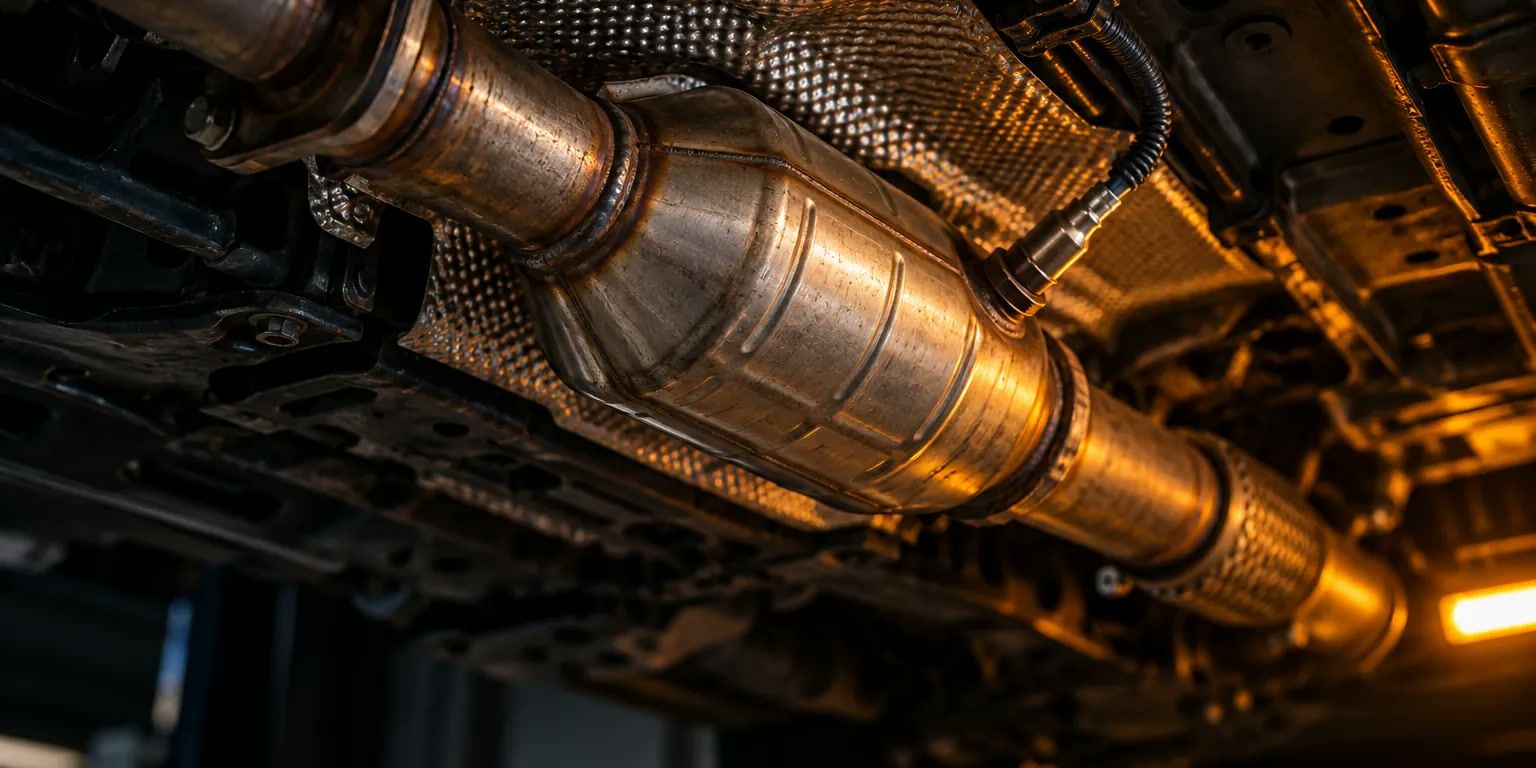
P0420 stands for "Catalyst system efficiency below threshold (Bank 1)". Your car's engine computer watches two oxygen sensors in the exhaust, one before the catalytic converter and one after it. A healthy converter cleans up the exhaust and evens out the oxygen level, so the rear sensor gives a fairly steady reading while the front one rises and falls.
When the rear sensor starts copying the front one, the computer decides the converter has stopped doing its job. It stores P0420 and turns on the engine warning light.
"Bank 1" is the side of the engine with cylinder number 1. Most four-cylinder engines only have one bank. P0430 is the same fault on bank 2 of a V6 or V8.
What you might notice
Often nothing at all. Plenty of cars with P0420 drive normally, and the warning light is the only sign. When there are symptoms, they tend to be:
- a rotten-egg smell from the exhaust
- sluggish acceleration or worse fuel economy than usual
- a rattle from under the car, which can mean the inside of the converter has broken up
Common causes
The code names the converter, but the converter is often the victim of another fault, and sometimes it isn't faulty at all.
A worn catalytic converter
Converters wear out with age and mileage. Heat, knocks from below and contamination shorten their life.
A faulty rear oxygen sensor
A slow or failing sensor after the converter can report a problem the converter doesn't have. The sensor is a much cheaper part, so it's worth ruling out first.
An exhaust leak
A leak near either oxygen sensor lets outside air in and upsets the readings.
Misfires or too much fuel
Unburnt fuel from a misfire overheats the converter and can melt its insides. If misfire codes (P0300 to P0306) or fuel mixture codes appear alongside P0420, fix those first. Otherwise a new converter can fail the same way.
Burning oil or coolant
Oil or coolant getting into the exhaust coats the inside of the converter. Blue or white smoke, or an oil or coolant level that keeps dropping, are the clues.
Checks to do before you buy parts
- Read every stored code, not only P0420. Other codes often explain why it appeared.
- Listen for exhaust leaks between the engine and the converter, and around both oxygen sensors. A ticking or puffing sound when the engine is cold is a common sign.
- If your scanner shows live data, warm the engine up fully and watch the rear oxygen sensor. A steady reading suggests the converter is working. A reading that rises and falls quickly, like the front sensor, points to the converter.
- Check the rear sensor's wiring and plug for damage or corrosion.
- Clear the code and drive normally for a few days. If it comes back, the fault is still there.
Some of these checks need a scanner that reads live data, and leaks can be hard to find without lifting the car. If you're not sure, a mechanic can confirm the cause before you pay for a converter.
Can you keep driving?
P0420 on its own is rarely an emergency, but it's worth sorting out soon. A converter that isn't working lets more pollution out, and in the UK an engine warning light that stays on will usually fail the MOT.
Get the car checked straight away if the warning light is flashing, if you can smell burning or if the engine loses power. A flashing light usually means a misfire, which can damage the converter quickly.
What it might cost
That depends on which fault is behind the code. Fixing a small exhaust leak or replacing an oxygen sensor costs far less than a new catalytic converter, which is usually the most expensive fix. The make and model, genuine or aftermarket parts and local labour rates all change the price.
Got a P0420 code? Get a report for your car.
Add your vehicle's make, model, engine type and year, then enter the code and any symptoms. Your report lists possible causes and suggested checks, with a severity rating and estimated UK repair costs. Your first report is free.
 One free report for new users. No credit card required.
This article is general information about a common fault code. Seek advice from a qualified mechanic before buying parts or carrying out repairs.